

It is crucial to understand that family law Judges and courts will always put the child’s best interests above any other factor when rendering a decision. In the case of Children’s Aid Society of Oxford County v. C. (W.T.), a biological mother argued that due to the delay in the court-proceeding process, she never had a chance in her appeal to take her child back from the adoptive parents, and thus her section 7 Charter rights were breached. The case witnessed an institutional delay regarding the preparation of certain transcripts that allowed the adoptive parents to hold on to the child and create an uninterrupted four-year bond with no access awarded to the biological mother. During that time, the biological mother put her life together and claimed to be sufficiently capable of mothering her child. The Court recognized the progress she had made during the four-year period and acknowledged that she would now be deemed fit to raise her child. However, the Court did not rule in her favor. The Court of Appeal emphasized the bond the child had made with the adoptive parents during these four years, and declared that the child’s best interests were to be place above...

When a judge makes an order, the order is mandatory for the parties involved. Judges' orders have to be followed by the parties to whom they are directed, regardless of one’s personal feelings and beliefs regarding the situation. The only option that one has, with regard to stopping the order, is to get the court order reversed. In order to get the court order reversed, you are required to seek either an appeal of the order, or to vary the order, within the prescribed timelines. Whether or not the court will accept the appeal, and therefore whether the order is varied, depends on whether or not you have, as seen by the court, a valid reason to want the order to be reversed. You ought to provide evidence in order to further prove the validity of your position. In the mean time, however, the parameters and requirements that are outlined by the court order must be followed. Not following the order would put both you and your children are in contempt of the order. Being in contempt of the order may actually, in the long run, work against you when you apply for the appeal. If there is a concern...

In Ontario, family courts have and do sanction the behavior of a spouse if he/she has not complied with a court order. In McAllister v. McAllister, Justice Campbell of the Ontario Superior Court of Justice reversed an earlier ruling that granted the wife permission to relocate with her son and live with her new boyfriend. Despite being awarded access rights to his child, the father was blocked and deprived from seeing his son, as the mother had relocated and made every attempt to sever the relationship between her child and his father. In his ruling, Justice Campbell, scolded the mother for disobeying the lower court’s ruling, which explicitly expected that the father of the child would have the opportunity to visit and continue building the relationship with his son. Justice Campbell ruled that he was of the opinion that the mother was “gatekeeping” and alienating her former husband from performing his right of access to his child. Consequently, Justice Campbell reversed the lower court’s ruling, forcing the mother to opt for one of two choices: Maintain custody of the child, but return home to ensure that the father’s access rights are upheld; or, Do not return home, lose custody of...

In the case of Children’s Aid Society of Toronto v. U. (E.), Justice Sherr analyzed whether parents of a crown ward should have continuing access. Justice Sherr stated that there had been recent amendments to the Child and Family Services Act in Bill 179 regarding continuing access in adoption cases, and he referred to the approach taken in Catholic Children’s Aid Society v. M.M. In that case, Justice Ellen Murray stated that although an access order will not prevent the child from being placed for adoption, a Notice of Intent to place the child for adoption will terminate the access order, ultimately leaving the parents with the option of applying to the court for an openness order. Justice Ellen Murray elaborated on what the court will take into account when ruling on an openness order. Justice Murray quoted the newly amended Section 59 (2.1) of the Child and Family Services Act whereby “the Courts of first instance will only make a Crown Wardship Order with access if the Court is satisfied that: The relationship between the person and the child is beneficial and meaningful to the child; and, The ordered access will not impair the child’s future opportunities for adoption.”...

The fact that you have had sole custody of the children after separation (or de factor sole custody) sets a status quo in your matter. This status quo has momentum. However, this momentum is not determinative. If your matter ultimately proceeds to court, a judge will, at that time, determine custody based on the best interests of the children. There are many different situations whereby a parent has de facto sole custody. De facto sole custody: Implies that one parent has taken on the assumption of sole custody but that this parent has no legal documentations to support the claim. Means that you currently have legal custody of your children and that you have been making all decisions with regard to the care and upbringing as if you had full legal custody over them. For example, in the event that you and your spouse split up, and your spouse has moved out of the apartment and only sees the children of the marriage once in a while, then you would technically have de facto sole custody. In the event that you and your spouse have formally accepted that you ought to have sole custody, it is unlikely that a court...
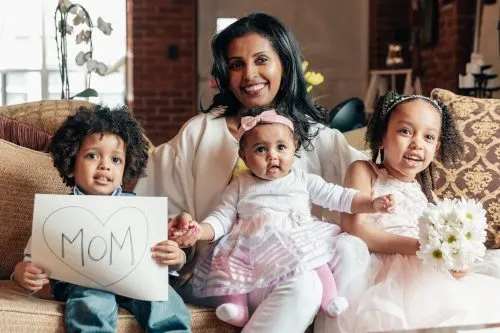
(a) Information on adoptions There are four ways in which a child may be adopted in Ontario. They are as follows: 1) By a family member or step-parent. In making this determination on Application, a court will focus on the best interests of the child. 2) Through a Children’s Aid Society. For example, the Catholic Children’s Aid society and Jewish Family and Child Services. 3) Through a licensed individual or private adoption agency. 4) Through an Ontario licensed international adoption agency and Ontario licensees. For example, Kids Link International Adoption Agency, operating as Imagine Adoption, managed by Mission of Tears. For contact information of the various international adoption agencies, click here. (b) What happens to the child(ren) if there is a breakdown in the marriage? The process of adoption allows for individuals to take on the commitment of being able to care for a child. Through the adoption process, individuals are granted the legal right and responsibility to care for a child. An adopted child has the same rights throughout the divorce process as any biological child. Negotiations surrounding residency, access and custody are equally applicable to spouses’ biological and adopted children. Furthermore on the issue of child support, by committing...